Activation
  Advertising quotation
  Outdoor Advertising
  Billboard
  Transit Advertising
  Roadshow Advertising
  Radio Advertising
  Urban Lighting Decoration
  Park Advertising Sponsorship
  School Advertising
  Online Advertising
  Advertising Law
Advertising on buses: Nationwide pricing, leading service
Sixth Sense Media provides nationwide bus advertising services with a fast execution process, attractive pricing, and many incentives. We are capable of implementing large‑scale advertising campaigns, not only in major cities but also inter‑provincial bus advertising projects that enhance brand recognition for customers.
1. What is bus advertising?
Bus advertising is the form of placing images of products, services, or brands on the exterior or interior of a bus. Bus advertising is likened to moving billboards on the street—large advertising areas that easily impress passersby.
The advantage of this form is that it directly impacts the visual perception of people on the road, with many advertising formats available.
Currently, bus advertising is divided into two types: exterior bus advertising and interior bus advertising.
2. What forms does bus advertising include?
To help you understand better, below are the specific advertising formats that are most commonly used today.
2.1. Exterior bus advertising
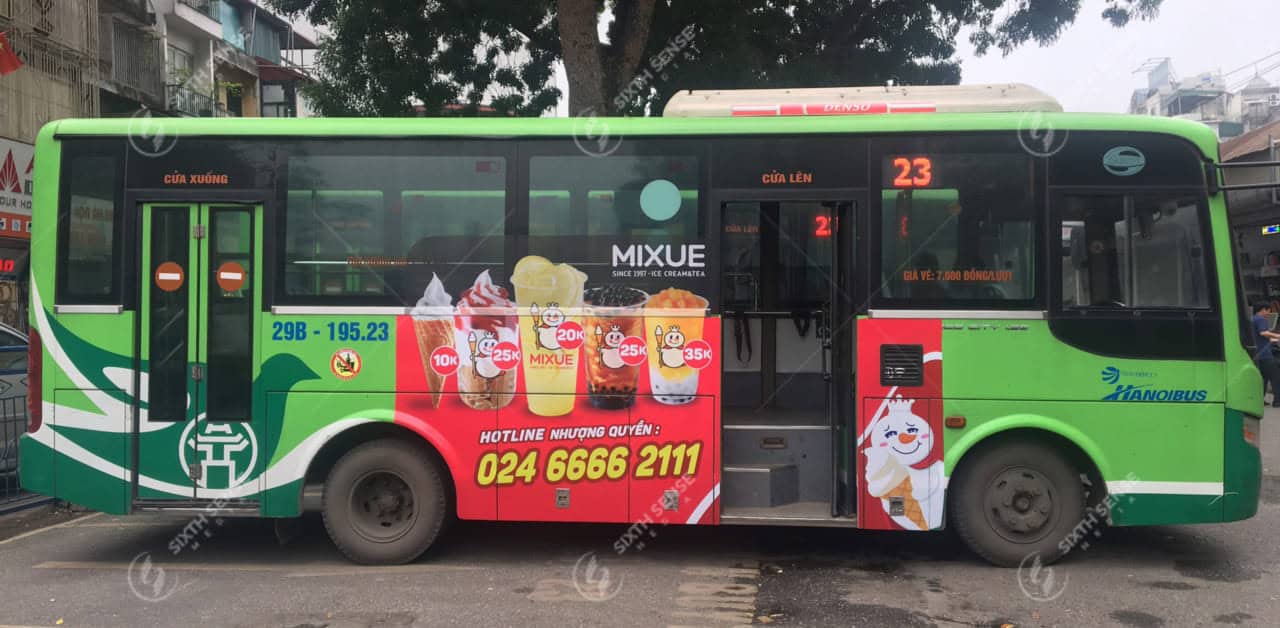
Advertising on the bus body involves using large banners (made from glossy laminated decal, matte laminated decal, and perforated window film) applied to both sides of the bus, with the area not exceeding 50% of the total area of the two sides.
Exterior bus advertising depends on the actual size of each bus type. The most common are B40, B60, and B80, corresponding to buses with 40, 60, and 80 seats (including standing). There are three main formats: Body, Die‑cut, and Full glass.
2.1.1. Body advertising
This format is limited in height from the lower edge of the windows to the chassis, and from the rear edge of the front wheel to the middle of the rear wheel. The average area per side is 4 m² to 7 m² depending on the bus type.
- Advantages: Easy to install, durable, less fading, lower cost, large advertising area, applicable on all buses.
- Disadvantage: On rainy days, the bus may not look clean.
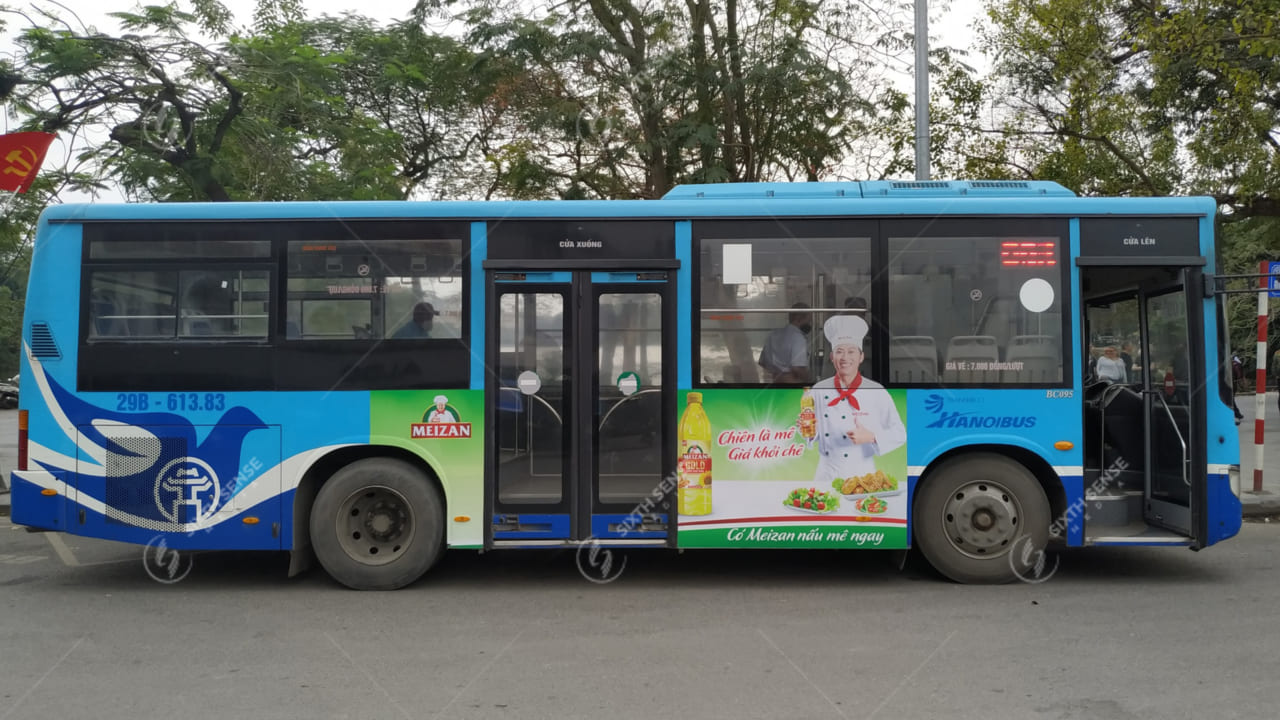
2.1.2. Die‑cut advertising
This is a combination of body advertising with a portion of the image extending onto the windows (not exceeding 60% of the window area). Perforated window film is used so passengers can still see outside. The average area per side is 6.5 m² to 8 m² depending on bus size, and it must not exceed 50% of the total advertising area (including glass).
- Advantages: Eye‑catching, impressive, reasonable cost, large area. Common in Hanoi, Ho Chi Minh City, inner‑city Da Nang, and some other provinces.
- Disadvantage: Not all routes allow this—depends on local regulations.
2.1.3. Full glass advertising
Applied only on inner‑city buses in Ho Chi Minh City. The area covers from the top edge of the glass down to the body. The average area is 9 m²–10 m² per side, but must not exceed 50% of the bus’s total advertising area.
- Advantages: Very large area, highly impressive, high operating frequency. Perforated window film does not affect passenger visibility.
- Disadvantage: Higher cost than other formats.

2.2. Interior bus advertising
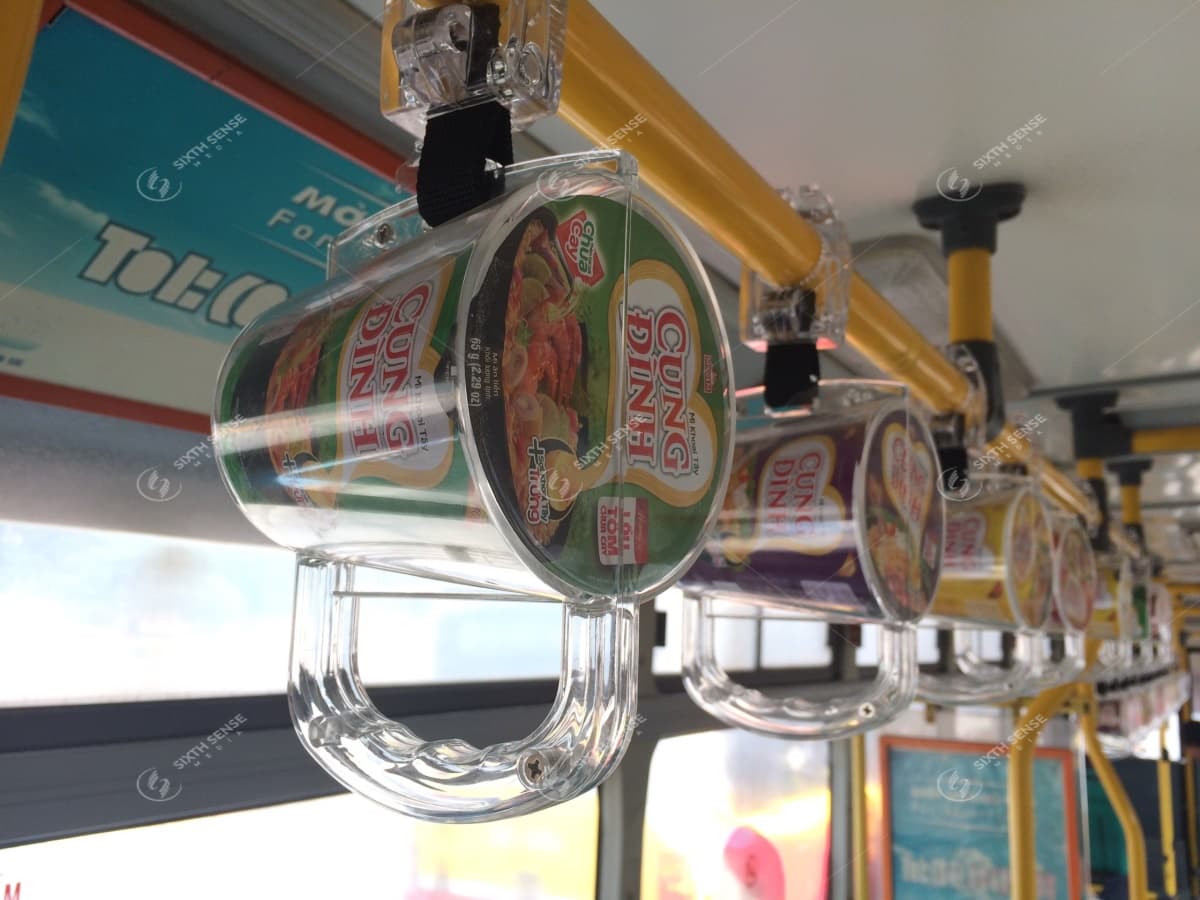
Interior advertising is diverse, such as posters, frames, and banners. The most popular is advertising on bus handgrips, which directly reaches passengers.
2.2.1. Handgrip advertising
The most chosen by businesses because passengers physically hold the handgrips. Sixth Sense Media offers 2D and 3D handgrip ads. Quantity ranges from 25–40 per bus depending on size (B40, B60, B80).
| 2D Bus Handle Ads | 3D Bus Handle Ads |
 |  |
2.2.2. Frame/Poster advertising inside the bus
Advertising on pre‑installed frames, size 30 cm × 60 cm. Many businesses use this to promote their products.
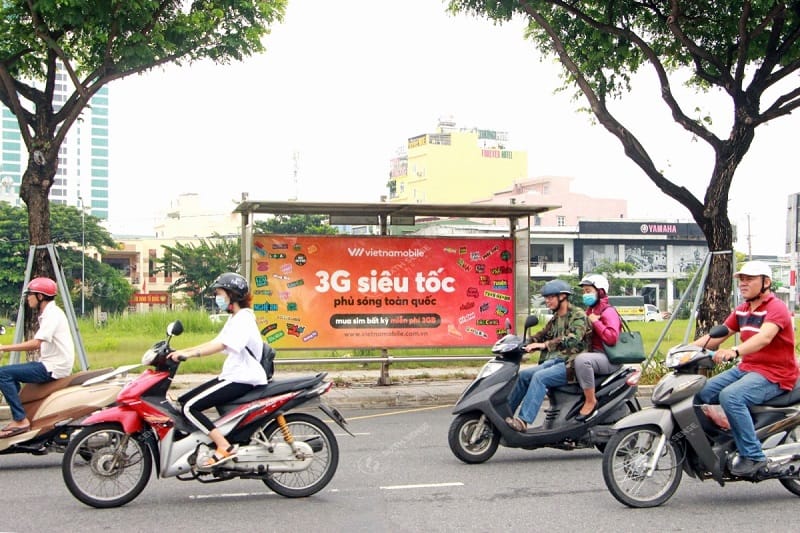
2.3. Advertising at bus shelters
In addition to bus ads, investors can consider bus shelter advertising. Along with the bus network, shelters are upgraded to serve passengers. Ads here reach both passengers and passersby.
Ads can be placed inside, on both sides, or as 3D mockups on the shelter roof.
2.4. Advertising on VinBus electric buses
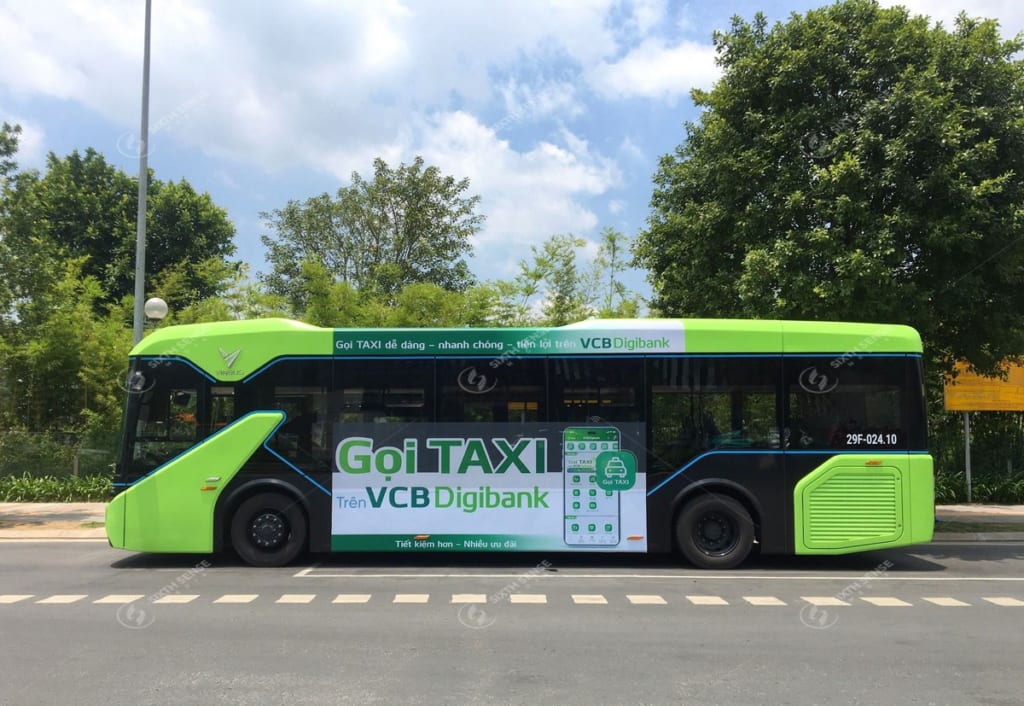
Advertising on VinBus electric buses is done on the clean electric bus system of Vingroup. Currently operating in Hanoi, Ho Chi Minh City, and Phu Quoc.
In Hanoi: buses connect with public transit routes covering many areas.
In HCMC and Phu Quoc: ads are deployed on buses operating in Vingroup’s residential areas, entertainment, and resorts.
Ad formats include:
Die‑cut decals on bus bodies
LCD screen ads inside buses
Ads at VinBus shelters within urban areas, resorts, entertainment complexes.
2.5. Advertising on City Tour 03 buses
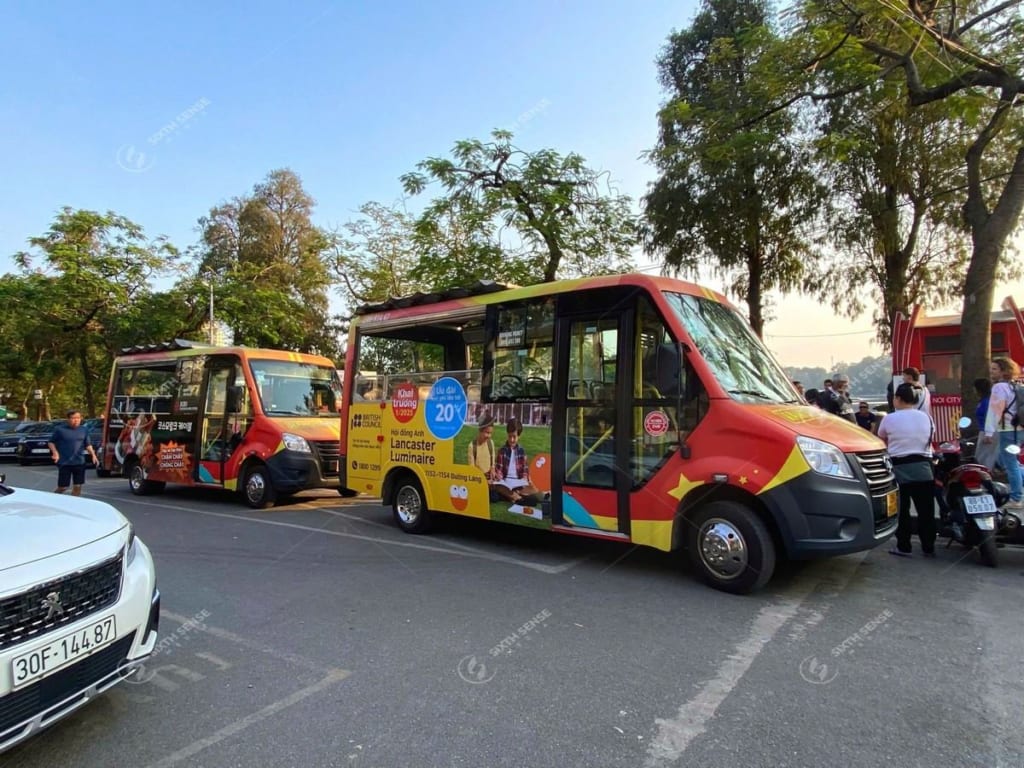
City Tour 03 is a mini double‑decker sightseeing bus operating only in Hanoi. Sixth Sense Media exclusively manages its advertising service.
Compact size, routes through Old Quarter and central streets with heavy traffic. Modern design highlights your ad.
Two packages:
Weekly ad: rent bus with ad, run on normal route/timetable.
Roadshow ad: rent bus with ad, run on custom route/timetable.
2.6. Advertising on double‑decker buses
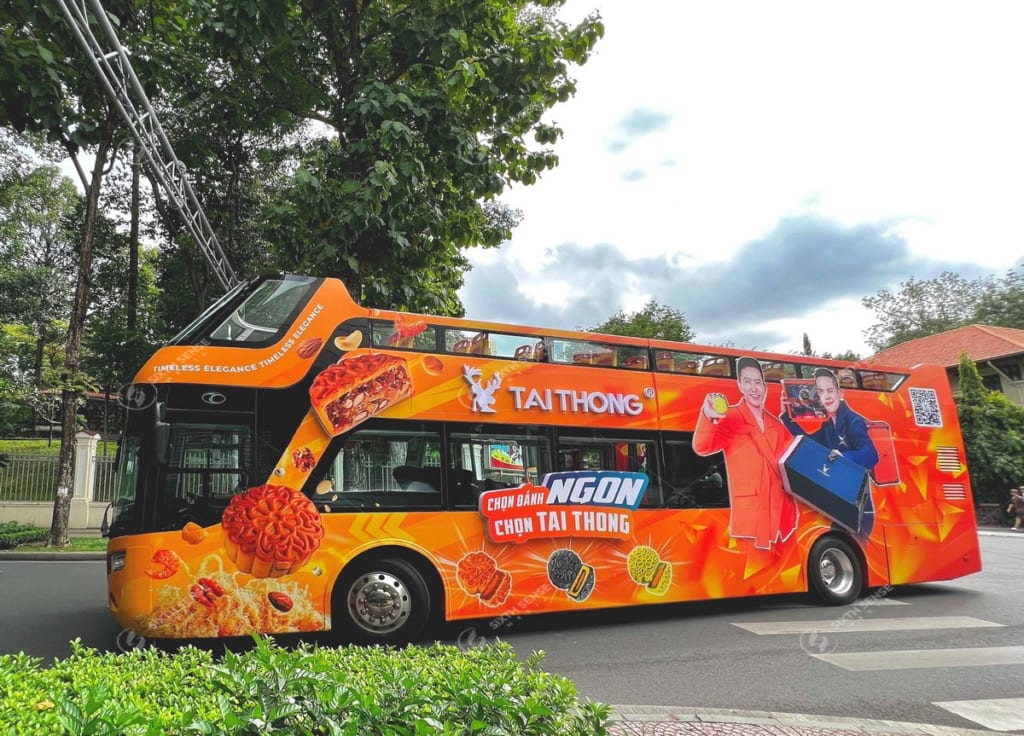
For a more prominent brand presence, consider advertising on double‑decker buses—the largest bus type in this market.
Currently operating in Hanoi, HCMC, Ha Long, Hue, Da Lat. In other provinces, buses can run for roadshows but not carry passengers.
Options:
Weekly/monthly ads: bus runs normal schedule with your ad.
Roadshow: bus runs on custom route/timetable; can combine with activations, sampling, games, or music events.
3. Advantages of bus advertising
Large format ads create high impact.
Fixed routes repeated many times daily enhance brand recall.
Reaches mass audiences, suitable for most brands.
Quick process, few legal obstacles.
Affordable, suitable even for SMEs.
4. Implementation process for bus advertising
5. Bus advertising price list
Prices vary by format, route, quantity, duration, and location. Below is a reference price table from Sixth Sense Media:
| Format | Size | 1 month (VND) | 3 months (VND) | 6 months (VND) | 12 months (VND) |
|---|---|---|---|---|---|
| Bus body | 4m²–7m² | 14,800,000–18,800,000 | 22,500,000–26,500,000 | 38,800,000–42,500,000 | 58,800,000–63,500,000 |
| Die‑cut | 6m²–8m² | 25,500,000–28,500,000 | 42,500,000–49,500,000 | 75,500,000–82,500,000 | 130,800,000–142,600,000 |
| Full glass | 8m²–10m² | 49,600,000–52,400,000 | 108,000,000–112,000,000 | 178,000,000–182,000,000 | 330,000,000–336,000,000 |
| Handgrip ads | 25cm × 15cm | x | x | 20,000,000–28,000,000 | 38,000,000–43,000,000 |
| Frame/Poster | 25cm × 50cm | x | x | 32,000,000–38,000,000 | 46,000,000–52,000,000 |
Note: Prices are for reference only. For detailed quotes, please contact Hotline: 0934 519 516.
6. Regulations for bus advertising
Regulated by Official Dispatch No. 2310/BVHTTDL-VHCS and Advertising Law No. 16/2012/QH13, effective from Jan 1, 2013.
6.1. Point b, Official Dispatch 2310/BVHTTDL-VHCS dated 24/6/2013:
From 01/01/2013, abolish the license for advertising on billboards, banners, public screens, luminous objects, aerial/water/transportation means… Instead, just notify authorities of ad content. No fees are collected for this notification.
6.2. Article 32 of the Advertising Law:
1 – Advertising on vehicles must comply with this law and traffic regulations.
2 – No ads on front, back, or roof of vehicles. Ads must not exceed 50% of each permitted side area. Logos or symbols of vehicle owners must comply with traffic laws.
Meaning: No need for an advertising license, but you must notify the local Department of Culture, and no fee is charged.

7. Important notes when planning bus advertising
Choose routes: Select routes that match your target coverage. Consider inter‑provincial buses for wider reach.
Number of buses & duration: At least 5 buses for 3 months or more.
Ad design: Keep it simple, creative, clear, easy to read and remember.
Choose a reputable agency: Work with a direct service provider with warranty and guaranteed project quality.
8. How is bus decal advertising applied?
Two key factors affect the aesthetics and durability of ads:
8.1. Choosing decal material
Decal quality affects durability. Some leave glue residue, some are too thin or fade quickly.
With 14+ years of experience, we select materials that withstand weather. For 12‑month ads, we offer free replacement if fading or peeling occurs.
8.2. Decal application techniques
Two techniques: wet and dry.
8.2.1. Wet application
Spray water on bus surface then apply decal.
Advantages: Quick, adjustable during installation.
Disadvantages: Edges may peel if not pressed carefully; slow drying, especially in cold or rainy weather.
8.2.2. Dry application
Requires skilled workers.
Advantages: Fast, clean, aesthetic, low chance of peeling.
Disadvantages: Needs expertise; mistakes mean reprinting.
With our experienced technicians, we guarantee 100% dry application for your campaigns.
9. Sixth Sense Media – Nationwide bus advertising solutions
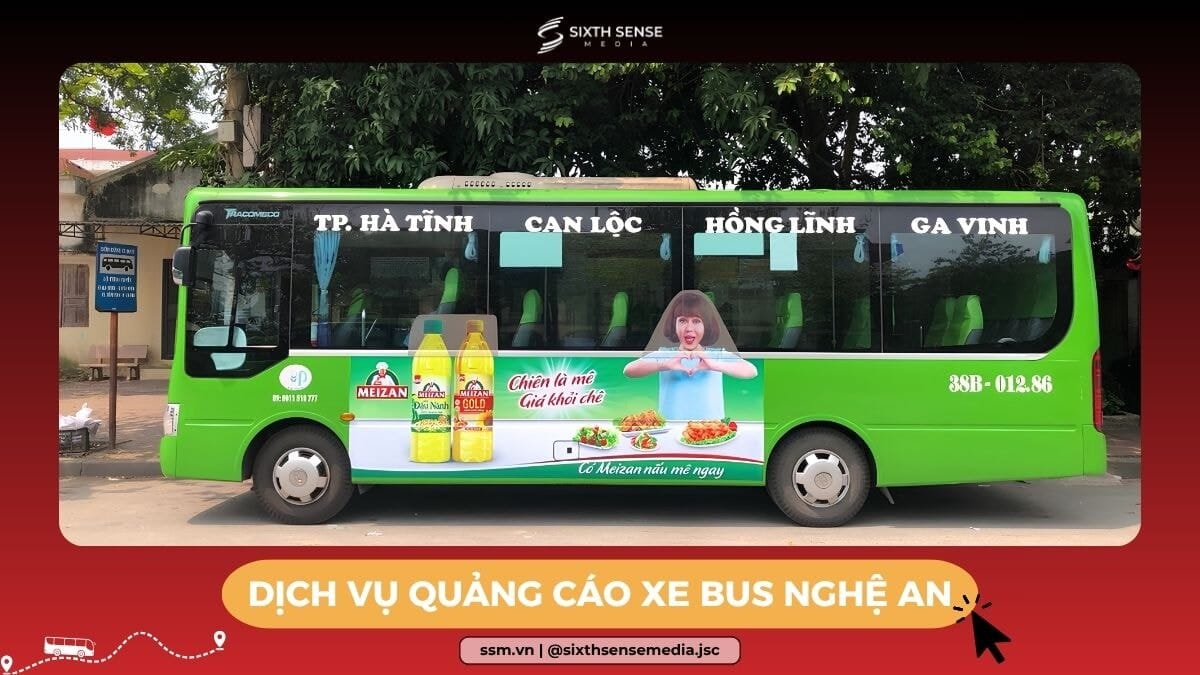
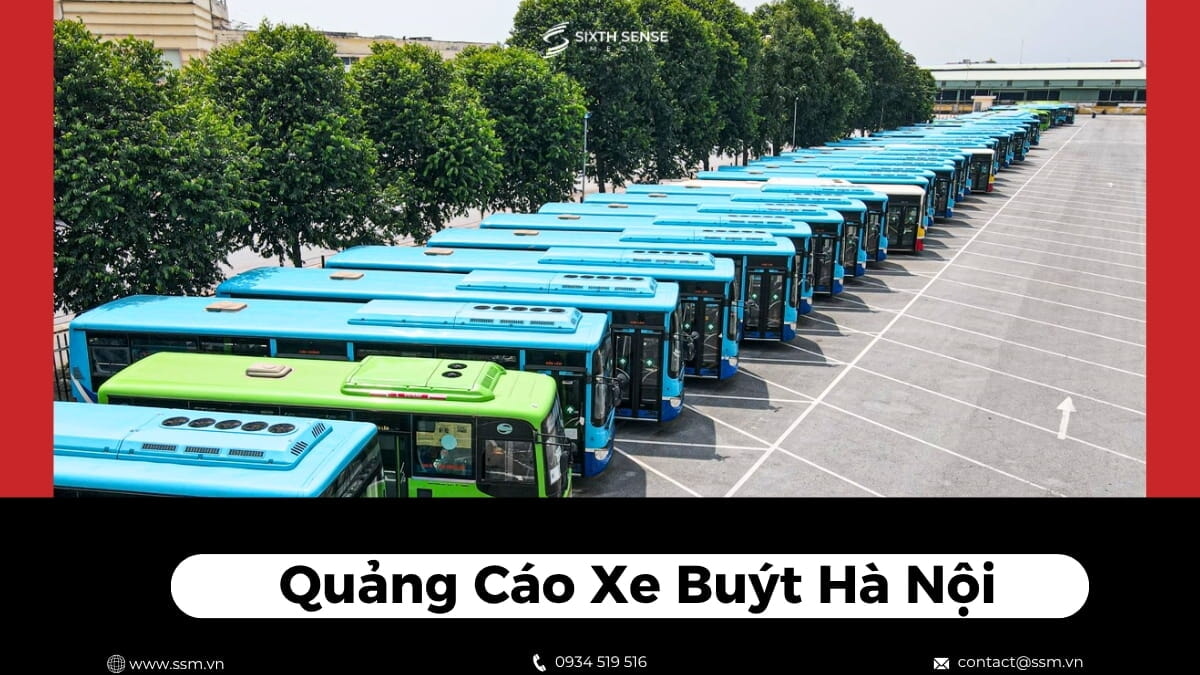
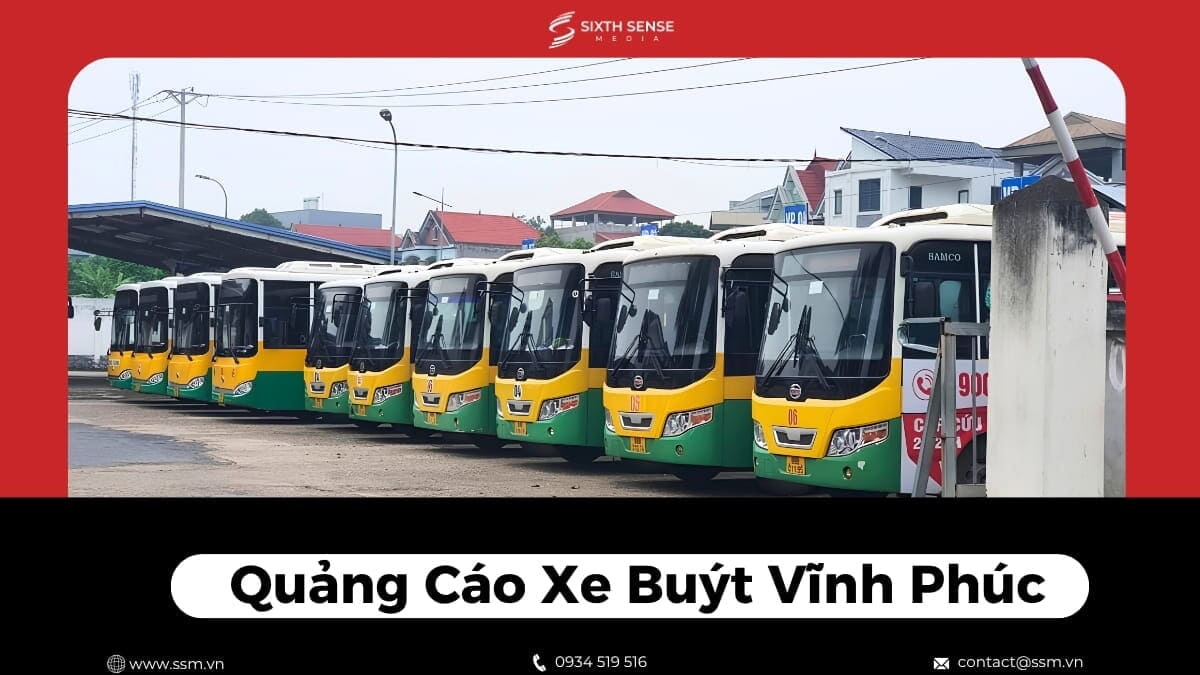
With extensive experience in nationwide bus advertising, we confidently deploy diverse formats across many provinces and cities: Hanoi, Ho Chi Minh City, Da Nang, Hai Phong, Quang Ninh, Can Tho, Nha Trang (Khanh Hoa), Vung Tau, Dong Nai, Binh Duong, Tien Giang, Ben Tre, Nghe An, Thanh Hoa, Ha Tinh, and more.
If you need consultation for a bus advertising campaign, please contact us for free advice!
Sixth Sense Media JSC
Hanoi Office:
3rd Floor, No. 6 Nguyen Cong Tru Street, Hai Ba Trung, Hanoi
Tel: (0243) 237 3692
Hotline: 0982 513 898
Ho Chi Minh City Office:
459 Su Van Hanh Street, Ward 12, District 10, Ho Chi Minh City
Tel: (08) 88 589 489
Hotline: 0934 519 516
Email: contact@ssm.vn
Bài viết mới nhất


100% FREE DEMO
If you want to quickly preview PRODUCT IMAGES for ADVERTISING in the most visual and vivid way, SSM is giving you a free demo marquette!